Every waterfowler knows that late-season hunts are brutal — not just on you, but on your ammo. As temperatures fall, winds shift, and birds toughen up, the weaknesses of traditional steel loads become painfully obvious. Patterns open up. Penetration drops. Birds glide after the hit instead of folding. Marginal shots turn into lost birds.
And hunters tend to blame everything else — their aim, their choke, the weather, “just a tough bird,” or the age-old excuse: “That’s just late season for you.”
But the truth runs deeper.
Cold weather changes the physics of your shotshell.
And most ammo simply isn’t built to overcome that.
Steel struggles because of what it is: light, soft, and slow to recover in harsh winter conditions. Tungsten, on the other hand, thrives when the temperatures drop. In fact, winter is where tungsten truly proves its value.
At Black River Shot Company, we test loads in real-world late-season hunts — bitter wind, sub-freezing mornings, migrating flocks, and birds with thick winter plumage. Tungsten #9 consistently performs better in December than nearly anything else on the market.
This is the science behind why.
Cold Air Changes Everything — Especially for Steel
You’ve probably noticed it before:
- Your gun feels sluggish.
- Your shells don’t seem as punchy.
- Ducks take hits and keep flying.
- Crossing shots feel “iffy.”
None of that is a coincidence.
1. Cold air is denser — and denser air creates more drag.
Drag is the force that slows a pellet down as it travels through the air. The colder the temperature, the denser the air becomes. That means:
- Pellets lose velocity faster
- Trajectory drops more quickly
- Wind drift increases
Steel, because it’s so light (7.8 g/cc), is severely affected by this drag.
2. Steel loses energy quickly.
Late-season birds are typically taken at 25–50 yards. That’s exactly the range where steel runs out of steam.
A #2 steel pellet:
- Starts fast
- Bleeds velocity fast
- Hits weak once it loses speed
Winter exaggerates that weakness.
3. Powder performance changes in freezing temperatures.
While modern powders are more temperature-stable than older formulas, extreme cold still affects burn rate and pressure curves. That means:
- Slightly lower muzzle velocities
- More variation shot-to-shot
- Inconsistent patterns
In late-season, inconsistency equals lost birds.
Steel simply wasn’t built to handle harsh winter conditions.
Tungsten was.
Why Tungsten Performs Better in Cold Weather
The magic of tungsten isn’t marketing. It’s physics.
Tungsten is 18.0 g/cc, more than double the density of steel. That mass gives it tremendous advantages in winter:
1. Heavier pellets maintain velocity better in dense, cold air.
Because tungsten has so much mass in such a small pellet, it cuts through cold air with far less drag. Think of it like this:
- A tiny steel pellet is like a wiffle ball.
- A tiny tungsten pellet is like a lead fishing weight.
When both are thrown through the wind, one keeps going. One stalls out.
That’s exactly what happens downrange in late-season hunts.
2. Tungsten #9 retains more energy than steel #2 at real hunting distances.
This blows most hunters’ minds.
A tungsten #9 pellet — tiny, round, aerodynamic, dense — carries nearly the same energy at 40 yards as a lead #5, and more than a steel #2 does at that same distance.
Meaning:
- A tungsten #9 can break bone
- A tungsten #9 can penetrate heavy winter feathers
- A tungsten #9 can deliver lethal hits through body armor-like plumage
Steel #2 simply can’t.
3. Tungsten resists wind drift far better than steel.
Even a slight crosswind in December will push a light steel pellet several inches off target by 30–40 yards.
Tungsten’s mass stabilizes it. It flies straighter in:
- Crosswinds
- Headwinds
- Tailwinds
- Turbulent river-bottom thermals
When ducks are skirting your spread or refusing to finish, this matters a lot.
4. Tungsten gives you dramatically more pellets.
Steel #2: ~125 pellets per ounce
Tungsten #9: ~360 pellets per ounce
More pellets = more hits = more energy delivered across the bird.
This alone makes tungsten lethal in bad conditions.
But in cold weather? It’s a game changer.
Winter Birds Are Harder to Kill — Here’s Why Tungsten Solves It
Late-season mallards, gadwall, pintails, and especially divers are built like tanks. They’ve migrated hundreds or thousands of miles, bulked up, and grown thick insulating plumage.
Steel struggles to punch through this — especially when air density is working against it.
Tungsten #9 can do what steel #2 cannot: break through winter armor.
Why?
- Higher mass = deeper penetration
- Higher sectional density = better ability to pierce feather, skin, muscle
- Better retained velocity = more energy on impact
This means you get:
- Cleaner head/neck hits
- Stronger body penetration
- Far fewer cripples
- Far fewer “film birds”
- More ethical kills even at longer ranges
“When your shotshell performs predictably, your wing-shooting improves — especially in late-season chaos.”
Winter doesn’t just challenge shooters — it exposes the limits of cheap ammo.
Tungsten removes those limits.
Real-World Example: 40–50 Yard Late Season Shots
Every waterfowler knows the scenario:
The wind is high, the birds are nervous, and they circle wide all morning. You whistle, you feed-call, you shift your spread. Still, the greenheads finish 10 or 15 yards farther out than they did in October.
Steel loads at 40+ yards in winter are a gamble.
Tungsten loads at 40+ yards are a solution.
Here’s why:
Steel at 40 yards (cold air):
- Low velocity
- Low penetration
- Open patterns due to pellet count
- High chance of cripples
- Need for a perfect shot
Tungsten #9 at 40 yards (cold air):
- Retains much higher speed
- Penetrates through feathers and bone
- Tight, dense patterns (300% more pellets)
- Higher vital hit probability
- More forgiveness on angle shots
This is not small math — it’s a complete transformation in how the shot behaves.
If there’s one season you should never rely on steel, it’s winter.
Upgrade Your Hunt with Tungsten Loads
Don’t settle for less stopping power. Shop our premium tungsten shells and make every shot count.
Shop Tungsten LoadsCold Weather Affects Patterns — Tungsten Fixes That Too
Patterns open up in cold weather for several reasons:
- Pellets slow down quickly
- Pellets deform (steel and lead both deform)
- Powders vary in burn
- Wind pushes light pellets off axis
Tungsten addresses each issue:
Tungsten pellets don’t deform.
They remain perfectly round — more aerodynamic, more stable.
Tungsten pellets resist drag.
They stay tighter in the column, producing extremely consistent 30–50 yard patterns.
Tungsten improves your choke performance.
Because it patterns tighter by nature, you can step down one choke size and still achieve denser patterns than steel through a full choke.
It’s not just more killing power.
It’s more consistency, shot after shot.
Temperature Stability: Tungsten Loads Fire More Consistently
Premium tungsten loads like our Black River Green Head Wad shells use more consistent powder blends that maintain performance across hot and cold weather.
- Less velocity variation
- Less shot-to-shot spread
- Fewer “surprise flyers” in the pattern
When your shotshell performs predictably, your wing-shooting improves — especially in late-season chaos.
Choke Recommendations for Cold-Weather Waterfowling
Tungsten patterns tighter. Cold weather patterns open. The two forces offset each other beautifully — if you choose the right choke.
Typical December Recommendations:
20–35 yards:
- Improved Cylinder or Light Modified
35–50 yards:
- Modified
50+ yards (if your pattern test supports it):
- Modified or Full
Avoid Extra Full for ducks unless you’ve patterned it thoroughly — tungsten can over-tighten and create erratic patterns if the constriction is too extreme.
Winter birds require precision.
Your choke should complement your ammo — not fight it.
Practical Field Advantages in the Late Season
Hunters switching to tungsten in winter immediately report:
- Birds folding clean instead of gliding
- Dramatically fewer cripples
- More confidence on marginal angles
- Better success when birds won’t finish tight
- Cleaner kills at ethical but longer ranges
- Smaller gap between shot and kill ratio
Tungsten simply performs where steel falls apart.
This is why top-tier waterfowl guides insist on it during:
- Freeze-up hunts
- Migration pushes
- High-wind days
- Snow hunts
- Late-season river systems
- Diver hunting
Winter is the great equalizer — and tungsten is the equalizer for hunters.
If You Hunt Late Season, This Is the Load You Want
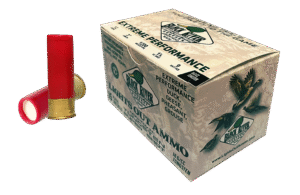
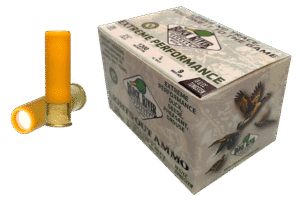
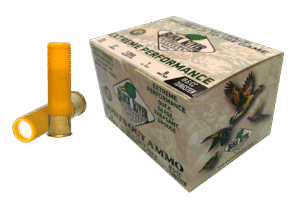
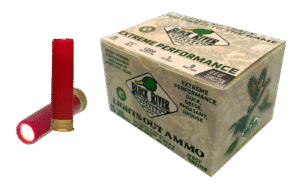
Black River Shot Company’s Green Head Wad lineup is engineered specifically for high-performance, cold-weather shooting.
Every one of these loads is:
- Tuned for consistent ignition
- Built around ultra-dense TSS #9
- Designed for tight, lethal winter patterns
- Structurally optimized to resist cold-weather performance loss
When it’s 10 degrees at shooting light and the greenheads are skirting the edge of the spread, this is the load you want chambered.

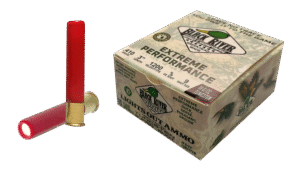
- Green Head Wad Shot Shells
Black River Wad Co .410 Gauge 3″, 5/8 oz – (1200 FPS) TSS #9 (15-Pack)
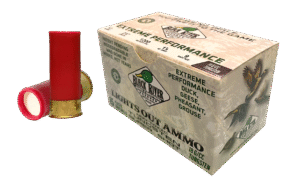
$69.99 - Green Head Wad Shot Shells
Black River Wad Co 12 Gauge 2¾″, 1 oz – (1200 FPS) TSS #9 (15-Pack)
$89.99 - Green Head Wad Shot Shells
Black River Wad Co 12 Gauge 3″, 1⅛ oz – (1200 FPS) TSS #9 (15-Pack)
$99.99 - Green Head Wad Shot Shells
Black River Wad Co 20 Gauge 2¾″, ⅞ oz – (1200 FPS) TSS #9 (15-Pack)
$79.99 - Green Head Wad Shot Shells
Black River Wad Co 20 Gauge 3″, 1 oz – (1200 FPS) TSS #9 (15-Pack)
$89.99 - Green Head Wad Shot Shells
Black River Wad Co 28 Gauge 2¾″, ¾ oz – (1200 FPS) TSS #9 (15-Pack)
$79.99
Bottom Line: Winter Makes Steel Worse — and Tungsten Better
Cold weather is the ultimate test of ammunition.
It exposes weaknesses instantly.
Steel slows down.
Steel loses energy.
Steel patterns open.
Steel cripples birds.
Tungsten thrives.
- Higher mass
- Higher density
- Better aerodynamics
- Better pattern density
- Better cold-weather stability
- Better penetration
Late-season ducks demand ammo that keeps its energy, its shape, and its consistency in harsh environments.
Tungsten does that better than anything else on the market.
If you’re serious about finishing your season strong — and doing it ethically — there’s only one answer:
TSS #9 — Always on target. Always Black River.